
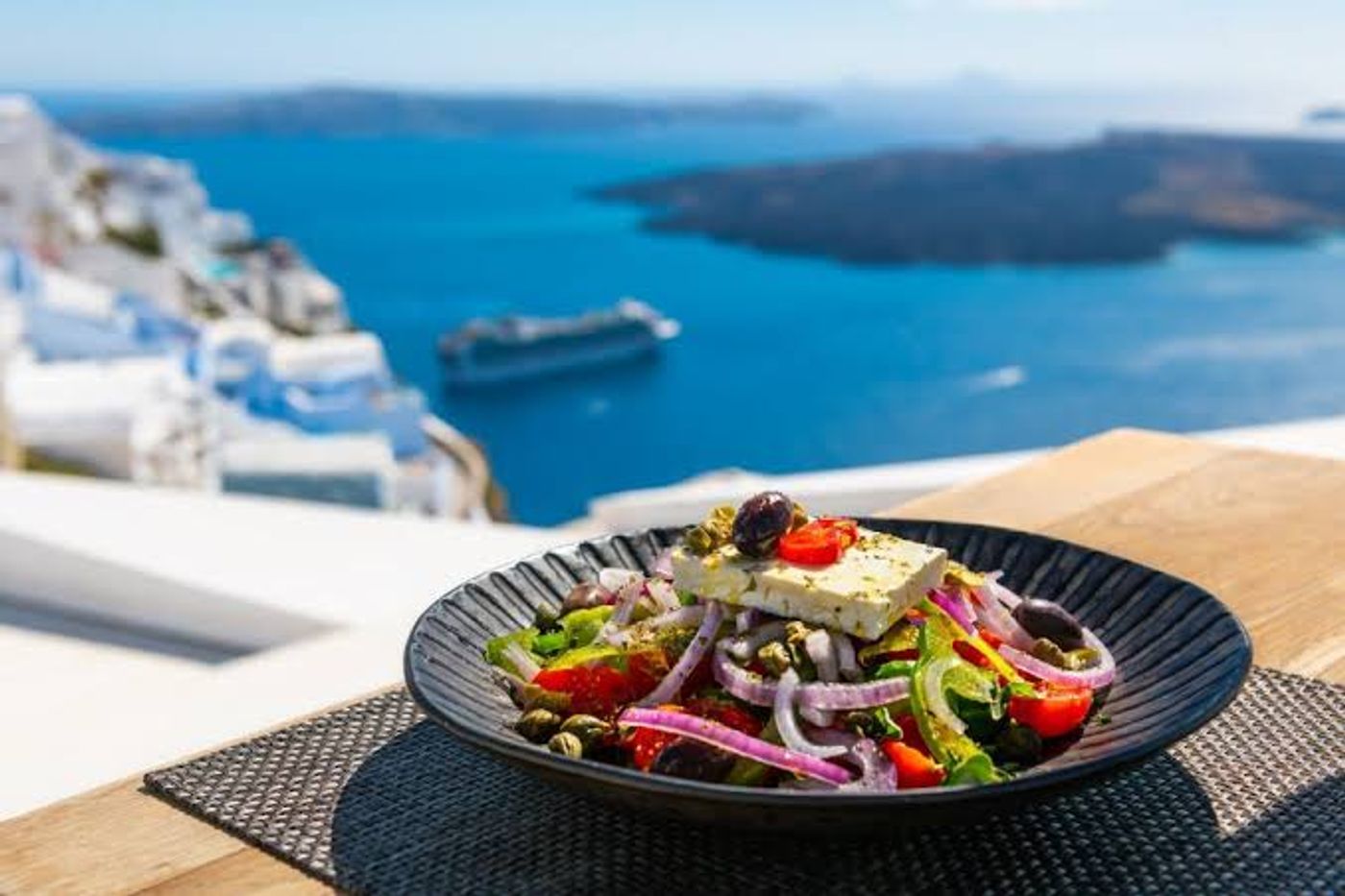
- Discover what to eat in Greece beyond the classic Greek dishes
- Learn how to order and share food at a traditional Greek taverna
- Get practical food tips to enjoy Greece like a local
Greek food is much more than souvlaki, moussaka and Greek salad.
From the islands of the Aegean and Ionian Sea to the mountains of mainland Greece, every region has its own ingredients, recipes and food traditions. Olive oil, herbs, vegetables, fresh seafood, local cheeses, honey, yoghurt, bread, pies and seasonal produce are at the heart of Greek cuisine.
One of the best ways to experience Greece is simply to eat where the locals eat, try something you have never tasted before and ask about the dishes that are special to the area you are visiting.
🇬🇷 What should you try in Greece?
If it is your first time in Greece, there are some classics worth trying:
Greek salad (Horiatiki) — tomatoes, cucumber, olives, onion and feta, usually finished with olive oil. Moussaka — layers of aubergine, meat and béchamel. Souvlaki — grilled meat served on skewers or in pita. Gyros — sliced roasted meat, usually served in pita with accompanying ingredients. Tzatziki — yoghurt, cucumber, garlic and herbs. Dolmadakia — vine leaves filled with rice and herbs, sometimes with meat. Spanakopita — pastry filled with spinach and feta or other cheeses. Grilled seafood and fish — particularly worth trying in coastal areas and islands. Greek yoghurt with honey and nuts — a simple and popular Greek combination. Baklava and other traditional sweets — often made with nuts, honey or syrup.
But don't stop at the famous dishes. Some of the best Greek food is regional and may never appear on a standard tourist menu.
🥘 Look for local dishes
Each part of Greece has its own culinary identity.
In Crete, look for dishes such as dakos, traditional pies, local cheeses, wild greens and lamb or goat dishes.
In the Dodecanese, including Rhodes and Kos, you can discover stuffed lamb or goat, local pasta, pies, dolmadakia and traditional sweets. Kos is also known for thyme honey, local cheeses, handmade pasta, olives and local wine.
In the Cyclades, look beyond the familiar Greek dishes and look for local cheeses, handmade pasta, chickpea dishes, fennel pies and regional sweets. Each island has its own specialties.
In the Ionian Islands, Venetian and Mediterranean influences have created distinctive dishes such as sofrito, pastitsada, bourdeto and other local recipes.
In Epirus and mainland Greece, traditional pies are a major part of the food culture, together with grilled and slow-cooked meats, local cheeses and mountain products.
🍽️ How to eat at a Greek taverna
A traditional Greek meal is often different from a typical restaurant experience in other countries.
Many dishes are designed to be shared. Instead of ordering one large main course per person, you can order several dishes for the table and try a little of everything.
A typical meal might include a salad, a few starters or meze, a main dish, bread and drinks.
Don't be afraid to ask:
“What is local today?”
The answer can lead you to something much more interesting than choosing only the dishes you already know.
🫒 Don't underestimate the ingredients
Greek cuisine is strongly based on good ingredients and relatively simple preparation.
Olive oil, oregano, thyme, lemon, rosemary, vegetables, legumes, grains, fresh fish and local cheeses appear throughout Greek cooking. Regional products and traditional recipes vary considerably from one part of the country to another.
When you visit a small village, island or mountain area, look for products made locally rather than choosing only internationally familiar dishes.
🥖 Bread, water and the table
At a Greek restaurant or taverna, you may be offered bread and water when you sit down.
The exact practice and charges can vary, so if something is unclear, simply ask what is included and what is charged separately.
Don't hesitate to ask for tap water if that is what you prefer, or for bottled water if you want it.
☕ Coffee is part of everyday life
Coffee in Greece is not simply something you drink quickly before continuing your day.
Cafés are an important part of everyday social life, and people can spend a long time talking over coffee.
Try a freddo espresso, freddo cappuccino, Greek coffee or a traditional frappé.
And if someone tells you they are going for “a coffee”, don't be surprised if they return much later.
🍷 Local drinks worth discovering
Food is only part of the Greek culinary experience.
Depending on the region, look for local wines, ouzo, tsipouro or raki, as well as regional liqueurs and traditional drinks.
Many islands and mainland regions have their own wine traditions and local products, so asking for something produced in the area can be a good way to discover the destination.
🍯 Don't leave without trying something sweet
Greek desserts go well beyond baklava.
Depending on where you travel, look for local sweets made with honey, nuts, sesame, fruit, yoghurt, cinnamon or traditional pastry.
Some regions have their own specialties that are closely connected with local ingredients and traditions.
🧺 Visit a local market
If you have time, visit a local market, bakery or small food shop.
It's a great way to discover products that you may not see on a restaurant menu — local cheeses, olives, honey, herbs, fruit, pastries, bread and regional specialties.
You don't always have to book a food tour to experience local food culture. Sometimes a walk through a neighbourhood market is enough.
👨👩👧 Eating with children
Greek restaurants are generally a comfortable choice for families.
Sharing several dishes can also make it easier when travelling with children because everyone can try something different.
If your child is not used to Greek food, start with familiar options such as bread, potatoes, rice, grilled meat, pasta or yoghurt and then introduce local dishes gradually.
🌱 Vegetarian and special diets
Greek cuisine has many naturally vegetarian dishes.
Look for vegetables, legumes, salads, grilled vegetables, beans, lentils, pies, rice dishes and vegetable-based meze.
If you have an allergy or a strict dietary requirement, always explain it clearly to the restaurant staff before ordering and ask about the ingredients.
💶 Tipping in Greece
Tipping is not always handled in exactly the same way as in other countries.
In restaurants and cafés, leaving something extra for good service is appreciated, but you should not feel that you have to follow a fixed percentage in every situation.
Check the bill first and see whether a service charge has already been included. If you are happy with the service, you can leave an additional amount.
🕐 When do Greeks eat?
Meal times can be later than visitors from some countries may be used to.
Lunch can be a substantial meal, while dinner often starts later in the evening, particularly during the summer.
In tourist areas, restaurants may serve customers throughout the day, so you will usually have flexibility. But if you want to experience the atmosphere of a local taverna, eating at local times can be part of the experience.
📍 The best food tip: ask locally
When you arrive somewhere in Greece, ask a local:
“What should I eat here?”
Not:
“Where is the best tourist restaurant?”
A hotel receptionist, taxi driver, shop owner or local host may point you towards a dish or small restaurant that you would never have found by searching for the most popular tourist attractions.
🇬🇷 Eat beyond the tourist menu
The real food experience in Greece is often found in the details:
A village bakery in the morning. Fresh fish near the sea. A small taverna serving a regional recipe. A local cheese you have never tried before. A plate of seasonal vegetables. Coffee with locals in the afternoon. A dessert made with ingredients from the area.
Don't just visit Greece. Taste it.
Photos
Views and likes help Contributors see what travelers find useful.
More tips in Greece
All advice
Van & Minivan Transfers in Greece Travel together, comfortably and without the hassle
 by Violeta Forozi
10 things worth doing before you leave for vacation
by Violeta ForoziTen simple steps before you lock the door — documents, airport transfer, eSIM, maps, and room for the unexpected.

eSIM or physical SIM? Why it is worth choosing for your next trip
 by Niki Tzanetou
eSIM vs physical SIM for travel: stay online from landing without swapping cards. What to check before you buy.
Disclaimer: The views and opinions expressed are those of the partner author and don’t necessarily reflect GoFleet’s official policy. Always check local rules and partner terms before you travel.